5 min to read
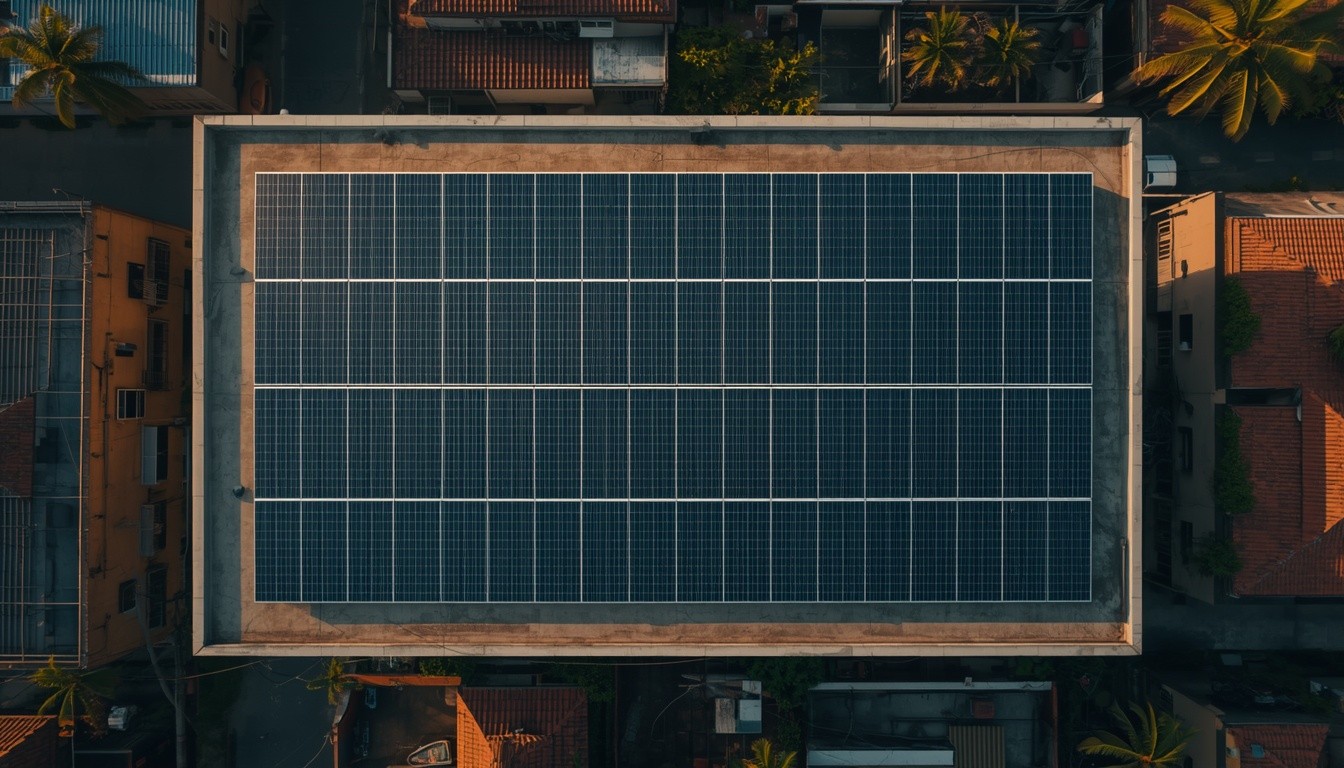
This is one of the most common questions we get from homeowners across Bengaluru and Karnataka. And it is a completely reasonable question to ask before committing to a solar installation.
The honest answer is that the number of panels your home needs depends on three things how much electricity your home actually consumes, how much rooftop space you have available, and which panel wattage you choose. There is no single correct answer that applies to every 2BHK or every 3BHK home.
But there are reliable benchmarks based on real consumption data from Indian homes that give you a strong starting estimate. This guide walks you through exactly how to calculate your panel requirement and gives you the numbers for typical 2BHK and 3BHK homes in Bengaluru and across India.
Step 1 Understand How Panel Requirements Are Calculated
Before giving you the numbers it helps to understand the logic behind them. Solar panel requirements are calculated using three pieces of information:
Your monthly electricity consumption in units Look at your last 12 months of electricity bills and find the average monthly units consumed. This is the most important number. Do not use just one month seasonal variation matters. A Bengaluru home uses significantly more electricity in summer due to air conditioning than in the cooler months.
Your location's peak sun hours Peak sun hours is the average number of hours per day that your location receives strong enough sunlight to generate rated solar power. Bengaluru receives approximately 5.5 peak sun hours per day averaged across the year. This accounts for monsoon periods, overcast days, and seasonal variation.
Panel wattage Most premium residential solar panels installed in India in 2026 are rated between 400 watts and 550 watts per panel. Higher wattage panels generate more power per panel and therefore require fewer panels for the same total system capacity but they are physically larger.
The calculation works like this:
Monthly consumption in units divided by 30 gives daily consumption. Daily consumption divided by peak sun hours gives required system capacity in KW. Required KW divided by individual panel wattage gives number of panels.
Step 2 Know Your Home's Typical Electricity Consumption
Here is what real Indian homes typically consume based on their size and appliances:
1BHK Apartment Typical consumption: Basic appliances - fans, lights, refrigerator, television, washing machine Monthly consumption: 100 - 180 units No air conditioning or one small 1-ton AC used occasionally
2BHK Home Typical consumption: Standard appliances plus one or two air conditioners used moderately Monthly consumption: 200 - 350 units This is the most common range for urban 2BHK apartments in Bengaluru
2BHK Home High consumption: Two or more ACs used frequently, multiple appliances running simultaneously, home office equipment Monthly consumption: 350 - 500 units
3BHK Home Typical consumption: Standard appliances plus two to three air conditioners used regularly Monthly consumption: 300 - 500 units Common for family homes in Bengaluru's residential layouts
3BHK Home High consumption: Three or more ACs, large appliances, home office, frequent entertaining Monthly consumption: 500 - 700 units or more
Check your last 12 BESCOM bills and find where your home falls in these ranges. That single number your average monthly units is the starting point for everything else.
Solar Panel Requirements for a 2BHK Home
Typical 2BHK 200 to 300 units per month
System size required: 2 KW to 2.5 KW
Number of panels at 400W per panel: 5 to 7 panels
Number of panels at 500W per panel: 4 to 5 panels
Rooftop area required: 12 to 18 square metres of shadow-free space
Expected monthly generation in Bengaluru: 200 to 280 units
Approximate cost before subsidy: ₹1,20,000 - ₹1,70,000
PM Surya Ghar subsidy: ₹60,000 -₹75,000
Net cost after subsidy: ₹60,000 - ₹1,10,000
Higher consumption 2BHK - 300 to 450 units per month
System size required: 3 KW to 4 KW
Number of panels at 400W per panel: 8 to 10 panels
Number of panels at 500W per panel: 6 to 8 panels
Rooftop area required: 18 to 25 square metres of shadow-free space
Expected monthly generation in Bengaluru: 300 to 440 units
Approximate cost before subsidy: ₹1,70,000 - ₹2,60,000
PM Surya Ghar subsidy: ₹75,000 -₹78,000
Net cost after subsidy: ₹1,00,000 - ₹1,90,000
Solar Panel Requirements for a 3BHK Home
Typical 3BHK 300 to 450 units per month
System size required: 3 KW to 4 KW
Number of panels at 400W per panel: 8 to 10 panels
Number of panels at 500W per panel: 6 to 8 panels
Rooftop area required: 18 to 25 square metres of shadow-free space
Expected monthly generation in Bengaluru: 300 to 440 units
Approximate cost before subsidy: ₹1,70,000 - ₹2,60,000
PM Surya Ghar subsidy: ₹75,000 - ₹78,000
Net cost after subsidy: ₹1,00,000 - ₹1,90,000
Higher consumption 3BHK 450 to 650 units per month
System size required: 4 KW to 6 KW
Number of panels at 400W per panel: 10 to 15 panels
Number of panels at 500W per panel: 8 to 12 panels
Rooftop area required: 25 to 35 square metres of shadow-free space
Expected monthly generation in Bengaluru: 440 to 660 units
Approximate cost before subsidy: ₹2,40,000 - ₹3,80,000
PM Surya Ghar subsidy: ₹78,000 maximum
Net cost after subsidy: ₹1,70,000 - ₹3,10,000
Quick Reference Table Bengaluru Homes 2026
Here is a simple reference table for the most common scenarios:
Monthly consumption 100 - 150 units: Recommended system: 1 KW - 1.5 KW Panels at 500W: 2 to 3 panels Rooftop area: 6 to 9 sqm
Monthly consumption 150 - 250 units: Recommended system: 1.5 KW - 2.5 KW Panels at 500W: 3 to 5 panels Rooftop area: 9 to 15 sqm
Monthly consumption 250 - 350 units: Recommended system: 2.5 KW - 3 KW Panels at 500W: 5 to 6 panels Rooftop area: 15 to 18 sqm
Monthly consumption 350 - 500 units Recommended system: 3 KW - 4.5 KW Panels at 500W: 6 to 9 panels Rooftop area: 18 to 27 sqm
Monthly consumption 500 - 700 units Recommended system: 4.5 KW - 6 KW Panels at 500W: 9 to 12 panels Rooftop area: 27 to 36 sqm
Monthly consumption 700+ units: Recommended system: 6 KW and above Panels at 500W: 12+ panels Rooftop area: 36+ sqm
How Much Rooftop Space Do You Actually Need?
A standard 500W solar panel is approximately 2.1 metres long and 1.1 metres wide, roughly 2.3 square metres of surface area. However you need additional space between rows of panels for maintenance access and to prevent panels from shading each other.
As a reliable rule of thumb for flat rooftops, which most urban Indian homes have, allow approximately 8 to 10 square metres of shadow-free rooftop area per KW of solar capacity.
So for a 3 KW system you need approximately 24 to 30 square metres of usable shadow-free rooftop space.
Shadow-free means no shading from water tanks, parapet walls, adjacent buildings, or trees between approximately 9 AM and 4 PM, the prime solar generation hours. Even partial shading on one panel can reduce the output of multiple panels depending on your inverter configuration.
This is why a proper site survey matters. It is not enough to measure your total rooftop area , you need to know how much of that area is genuinely shadow-free during peak hours. Arush Solar Tech assesses this precisely during the site survey using measurements and shading analysis.
What Panel Wattage Should You Choose?
In 2026 the most commonly installed panels for residential rooftops in India are in the 400W to 550W range. Here is how to think about the choice:
400W panels Smaller physical size, easier to install on smaller or awkwardly shaped rooftops. Require more panels for the same total capacity. Slightly lower cost per panel but need more of them.
500W panels The sweet spot for most urban Indian homes in 2026. Good balance of physical size, wattage, and cost. Generate enough power per panel to keep the total panel count manageable for typical rooftop sizes.
550W panels Highest wattage widely available for residential use. Require the fewest panels for a given capacity. Best for homes with limited rooftop space where every square metre counts. Slightly higher cost per panel.
For most 2BHK and 3BHK homes in Bengaluru 500W panels provide the best balance. A 3 KW system needs only 6 panels at 500W manageable on most urban rooftops with 18 to 20 square metres of shadow-free space.
Common Mistakes Homeowners Make When Estimating Panel Requirements
Using one month's bill instead of 12 months average: A single month's consumption is not representative. Bengaluru homes use significantly more power in March to May due to air conditioning. Using your summer bill alone will overestimate your requirement. Using your winter bill alone will underestimate it. Always use the 12-month average.
Not accounting for future appliances: If you are planning to buy an air conditioner, EV charger, or other high-consumption appliance in the next few years factor that into your system sizing now. Adding capacity later is expensive and complicated.
Ignoring rooftop shading: Many homeowners assume their entire rooftop is usable. In reality water tanks, staircase structures, parapet walls, and neighbouring buildings cast shadows that can reduce usable area significantly. Only shadow-free area counts.
Choosing a system based on round numbers: A 3 KW system is not automatically right for every 3BHK home. Your actual requirement might be 2.5 KW or 4 KW depending on your consumption. A correct system is sized to your data not to a convenient round number.
Oversizing to maximise exports: Installing a system significantly larger than your consumption to export more to the grid rarely makes financial sense under current net metering tariff structures. Size your system to cover 80 to 100 percent of your consumption not to maximise export.
A Worked Example Typical Bengaluru 3BHK Home
Let us work through a real example:
A family in Jayanagar, Bengaluru lives in a 3BHK apartment. Their last 12 months of BESCOM bills show monthly consumption ranging from 280 units in December to 520 units in May. Their 12-month average is 380 units per month.
Daily consumption: 380 divided by 30 equals approximately 12.7 units per day.
Bengaluru peak sun hours: 5.5 hours per day average.
Required system capacity: 12.7 divided by 5.5 equals approximately 2.3 KW. However we apply a 20 percent efficiency factor to account for inverter losses, wiring losses, dust, and temperature derating giving a recommended system size of approximately 2.8 KW. We round up to 3 KW.
Panels required at 500W per panel: 3000W divided by 500W equals 6 panels.
Rooftop area required: 6 panels at 2.3 sqm each plus spacing equals approximately 20 to 22 square metres of shadow-free rooftop space.
Expected monthly generation: A 3 KW system in Bengaluru generates approximately 330 to 380 units per month averaged across the year.
This covers approximately 87 to 100 percent of their average monthly consumption reducing their BESCOM bill from approximately ₹3,800 per month to ₹400 to ₹800 per month for grid import charges and fixed charges.
Why You Cannot Finalise Panel Count Without a Site Survey
All the numbers in this guide are reliable estimates for planning purposes. But the exact panel count for your specific home cannot be confirmed without a site survey. Here is why:
Your rooftop may have shading from a water tank that reduces usable area from 30 square metres to 20 square metres changing your panel count significantly.
Your roof slope and orientation affects generation. A south-facing rooftop in Bengaluru generates more than an east or west facing one.
Your sanctioned load from BESCOM limits your maximum system size a constraint that varies by connection and cannot be assessed without reviewing your actual bill.
The specific panel model available at the time of installation may vary slightly in wattage from the 500W assumption used in this guide.
These factors are why Arush Solar Tech conducts a thorough site survey before recommending any system. We measure your actual shadow-free rooftop area, check your BESCOM sanctioned load, review your 12-month consumption data, and design a system sized precisely for your property not based on a formula applied to your home type.
What Happens During Arush Solar Tech's Free Site Survey
When our team visits your property for a free site survey here is exactly what we do:
We measure your total rooftop area and identify shadow-free zones using compass orientation and shading analysis at different times of day.
We review your last 12 months of BESCOM bills to calculate your accurate average monthly consumption and identify seasonal patterns.
We check your sanctioned load to confirm the maximum system size BESCOM will approve for your connection.
We assess your rooftop structure to confirm it can safely support the panel mounting system without any risk of damage.
We identify the optimal inverter mounting location on your exterior wall with proper ventilation and cable routing.
Based on all of this we prepare a detailed proposal exact panel count, panel brand and model, inverter specifications, expected monthly generation, projected bill savings month by month across the year, total cost, applicable subsidy, and net investment required.
You get a precise answer for your specific home not an estimate based on your home type.
Ready to Find Out Exactly How Many Panels Your Home Needs?
Book a free site survey with Arush Solar Tech. Our team visits your property across Bengaluru and Karnataka at zero cost with zero obligation. We assess everything, do the calculations, and give you the exact answer for your specific rooftop and consumption profile.
No round numbers. No oversizing. No pressure.
Book your free site survey today. Call +91-9686260065 or WhatsApp Somashekar on +91 78993 50511. Or fill in the contact form at arushsolartech.com and we will respond within 2 business hours.
Arush Solar Tech Bengaluru's authorised solar channel partner. Trusted for government and private solar projects across Karnataka since 2018.