6 min read
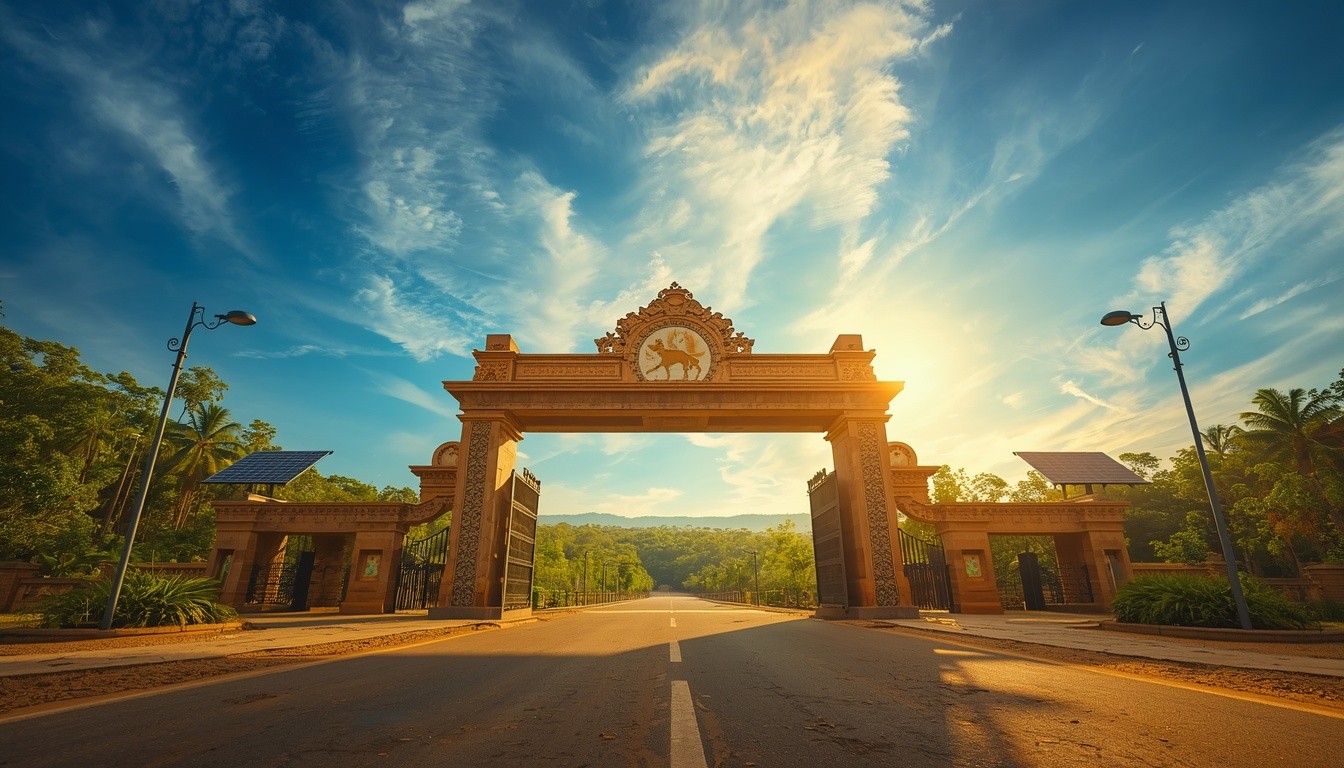
There are projects that teach you something. And then there are projects that define you.
Fencing 10 kilometres of the Biligiri Rangaswamy Temple Tiger Reserve one of Karnataka's most ecologically significant protected areas was both.
This is the story of that project. How we got there, what we delivered, what went wrong, what we learned, and why it matters for every rooftop solar customer who works with us today.
What Is the BRT Tiger Reserve?
The Biligiri Rangaswamy Temple Tiger Reserve known locally as BRT sits at the confluence of the Western and Eastern Ghats in the Chamarajanagar district of Karnataka. It is one of India's most biodiverse wildlife reserves home to tigers, leopards, elephants, gaur, and hundreds of bird species.
BRT is not just a wildlife reserve. It is a critical ecological corridor a strip of connected forest that allows wildlife to move between the larger Western Ghats forests and the Eastern Ghats. Maintaining that corridor is essential for the long-term genetic health of Karnataka's tiger population.
It is also bordered by agricultural land and villages. Human-wildlife conflict particularly elephants and other animals crossing into farmland and villages is a genuine and persistent challenge for the communities living around the reserve and for the forest department responsible for managing it.
Solar electric fencing is one of the most effective tools for reducing that conflict. It creates a physical and psychological barrier that keeps wildlife inside the reserve and protects crops and communities outside it without harming the animals.
How Arush Solar Tech Got the BRT Project
The BRT Tiger Reserve project did not come out of nowhere. It came directly from the credibility we had built through our earlier government work.
In 2018 we delivered our first major project at Virajpeta Range solar electric fencing, solar street lights, and a solar electrified camp for the forest range. That project established our capability to work in remote forest environments and deliver reliable solar infrastructure under challenging conditions.
In 2019 we were entrusted with Nagarhole National Park one of Karnataka's most prominent wildlife reserves. We installed solar electric fencing, solar street lights, solar electrified camps, and solar water pump sections across the park. The scale and sensitivity of Nagarhole required a higher level of precision and professionalism than any private installation we had completed.
The success at Nagarhole directly opened the door to BRT. Government solar projects at this level run on demonstrated track records. We had one.
When the BRT Tiger Reserve project came to us we were ready for it not just technically but operationally. We had learned from every forest project before it.
The Scale of the Project
Ten kilometres of solar electric fencing sounds straightforward until you stand at one end and look down the line.
Ten kilometres is not a single straight run across flat ground. It is ten kilometres of perimeter fencing through dense forest terrain navigating trees, rocky ground, seasonal water crossings, elevation changes, and areas where the forest floor made equipment movement genuinely difficult.
Each kilometre of solar electric fencing requires:
Solar panels sized to power the entire fence run reliably through periods of cloud cover and monsoon A charge controller to manage the power flow to the fence energiser A fence energiser the unit that delivers the electric pulse through the fence wire Multiple kilometres of high-tensile fence wire strung between posts Wooden or concrete fence posts installed at regular intervals Earthing systems to ensure the fence delivers an effective deterrent pulse Weatherproof enclosures for all electrical components that can survive Karnataka's monsoon season and high humidity
Multiplying that across ten kilometres in remote forest terrain, with limited vehicle access to many sections, working within the operational requirements of an active tiger reserve made this a genuinely complex project.
Working Inside an Active Tiger Reserve
Every solar installation presents its own challenges. An active tiger reserve presents challenges that no residential or commercial installation prepares you for.
Access to the work area was strictly controlled. Every entry required coordination with the forest department. Work could only happen during specific hours in certain areas. Our team had to be briefed on wildlife safety protocols before entering the field what to do if they encountered large animals, how to move through the forest without creating disturbance, which areas required forest guard escorts.
This was not theoretical. BRT has a healthy tiger and elephant population. Our team worked in areas where fresh elephant tracks were a regular sight.
Equipment logistics were challenging. Standard supply chains that work for urban installations do not work in remote forest terrain. Getting materials to specific locations along the 10-kilometre fence line required advance planning, coordination with local contacts, and in some sections manual carrying of materials over distances that vehicles could not cover.
The forest environment itself created technical challenges. Humidity, seasonal flooding in low-lying areas, root systems that complicated post installation, and tree canopy that affected panel placement each kilometre had its own specific conditions that required on-site problem solving.
We adapted constantly. That ability to adapt to solve problems in the field without the convenience of immediate supply chains or technical support is something you either develop through real project experience or you do not have at all.
What We Installed at BRT Tiger Reserve
The complete scope of work at BRT Tiger Reserve included:
Solar Electric Fencing 10 Kilometres: A complete solar powered perimeter fencing system running the entire 10-kilometre boundary. Solar panels mounted on dedicated poles at intervals along the fence line. Each section independently powered to ensure that a fault in one section does not disable the entire fence. High-tensile fence wire delivering a strong but non-lethal deterrent pulse at regular intervals.
The fencing was designed to remain effective through monsoon season the period when human-wildlife conflict is historically highest as animals move more widely in search of food and water. Weatherproofing of all electrical components was a specific design requirement.
Solar Street Lights Solar powered street lights installed at entry points, forest checkposts, and key locations along the reserve boundary. These serve both operational and safety functions lighting the areas where forest department staff work at night and improving visibility at points where wildlife crossing is most likely.
Solar Electrified Camp A complete solar power system for a forest department camp within the reserve providing reliable electricity for lighting, communication equipment, and basic operational needs without requiring grid connection in a remote forest location.
What the Project Taught Us
Every large and complex project teaches things that smaller projects cannot. BRT taught us several things that directly changed how we approach every project we take on today.
Planning for inaccessibility In urban and suburban solar installations access is rarely a major consideration. Materials arrive, equipment is available, the site is accessible. At BRT inaccessibility was a constant factor. We learned to plan material logistics with multiple contingencies, to pre-position materials in advance of installation teams, and to size our on-site inventory to avoid costly delays from supply gaps.
This planning discipline now applies to every project we do we plan for access challenges even when they are unlikely.
Environmental design matters In a tiger reserve you cannot design for convenience. You design for the environment. Panel placement, enclosure weatherproofing, earthing systems, and post installation methods all had to account for conditions that do not exist in urban installations monsoon flooding, wildlife interference, high humidity, and remote maintenance requirements.
This environmental design discipline makes our urban and suburban installations more robust. Systems we design today are engineered to last in difficult conditions even when the conditions at the customer's property are far more forgiving.
A reliable system is not enough it must stay reliable A rooftop solar system on a Bengaluru home that needs a service visit can be scheduled within days. A section of solar fencing in an active tiger reserve that stops functioning at night creates immediate risks for wildlife, for crops, for local communities. The stakes of failure are different.
This understanding of what it means for a system to be truly reliable not just on day one but through years of operation in difficult conditions is something we carry into every installation we complete.
Team capability grows with project scale The team that completed the BRT Tiger Reserve project was more capable at the end of it than at the beginning. Not just technically in terms of problem-solving, logistics management, coordination with government stakeholders, and working under challenging conditions. That accumulated capability is now part of everything Arush Solar Tech does.
Why This Matters for Our Residential and Commercial Customers
You might wonder what a tiger reserve fencing project has to do with installing solar panels on your home in Bengaluru.
It matters for two reasons.
The first is credibility. Any solar company can claim to do quality work. Very few can point to 10 kilometres of solar fencing delivered in an active tiger reserve as evidence of what quality work actually means in practice. The Karnataka Forest Department does not entrust its protected areas to companies that cut corners.
The second is capability. The technical challenges of remote forest installation weatherproofing, reliable off-grid operation, system longevity in difficult conditions, logistics under constraints made our team more capable engineers and installers. That capability is present in every system we design and install today regardless of whether it is a 3 KW rooftop system in BTM Layout or a large commercial installation in Peenya.
When Arush Solar Tech installs your rooftop solar system, it is installed by a team that has worked in conditions significantly more demanding than your rooftop. That experience does not disappear when the project context changes.
The Full Picture of Our Government Project Work
BRT Tiger Reserve was the largest of our government projects but not the only one.
Virajpeta Range 2018: Our first major project. Solar electric fencing, solar street lights, and solar electrified camp for the forest range. The project that established our government credibility.
Nagarhole National Park 2019: Solar electric fencing, solar street lights, solar electrified camp, and solar water pump sections across one of Karnataka's most prominent national parks. The project that proved our capability at national park scale.
BRT Tiger Reserve 2021: 10 kilometres of solar electric fencing, solar street lights, and solar electrified camp. Our largest and most complex project.
Government Forests, Panchayats, and Villages: Solar infrastructure delivered across multiple government projects in forests, panchayats, and villages bringing reliable solar power to communities that have historically lacked consistent grid supply.
Each of these projects built on the one before it. Each one made us more capable of delivering the next one. And all of them together make us a fundamentally different kind of solar company than one that has only ever installed residential rooftop systems.
What We Are Working on Now
Since BRT we have expanded our services significantly. We still deliver agricultural and infrastructure solar fencing, street lights, and off-grid systems for farms and remote properties. And we have brought that same standard of engineering and reliability to residential and commercial rooftop solar installation across Bengaluru and Karnataka.
Every rooftop system we install today benefits from everything we learned at Virajpeta, Nagarhole, and BRT. The materials we specify, the installation methods we use, the weatherproofing we apply, the quality checks we run before handover all of it is shaped by the experience of projects that demanded more than a standard installation.
If you are considering solar for your home or business in Bengaluru we would like to bring that experience to your rooftop.
Book a Free Site Survey
Free site survey across Bengaluru and Karnataka. No obligation. No pressure. Just an honest assessment of what solar can do for your property and exactly what it will cost.
Call +91-9686260065 or WhatsApp Somashekar on +91 78993 50511. Or fill in the contact form at arushsolartech.com and we will respond within 2 business hours.
Arush Solar Tech Bengaluru's authorised solar channel partner. From Karnataka's national parks and tiger reserves to your rooftop professional solar since 2018.