4 min to read
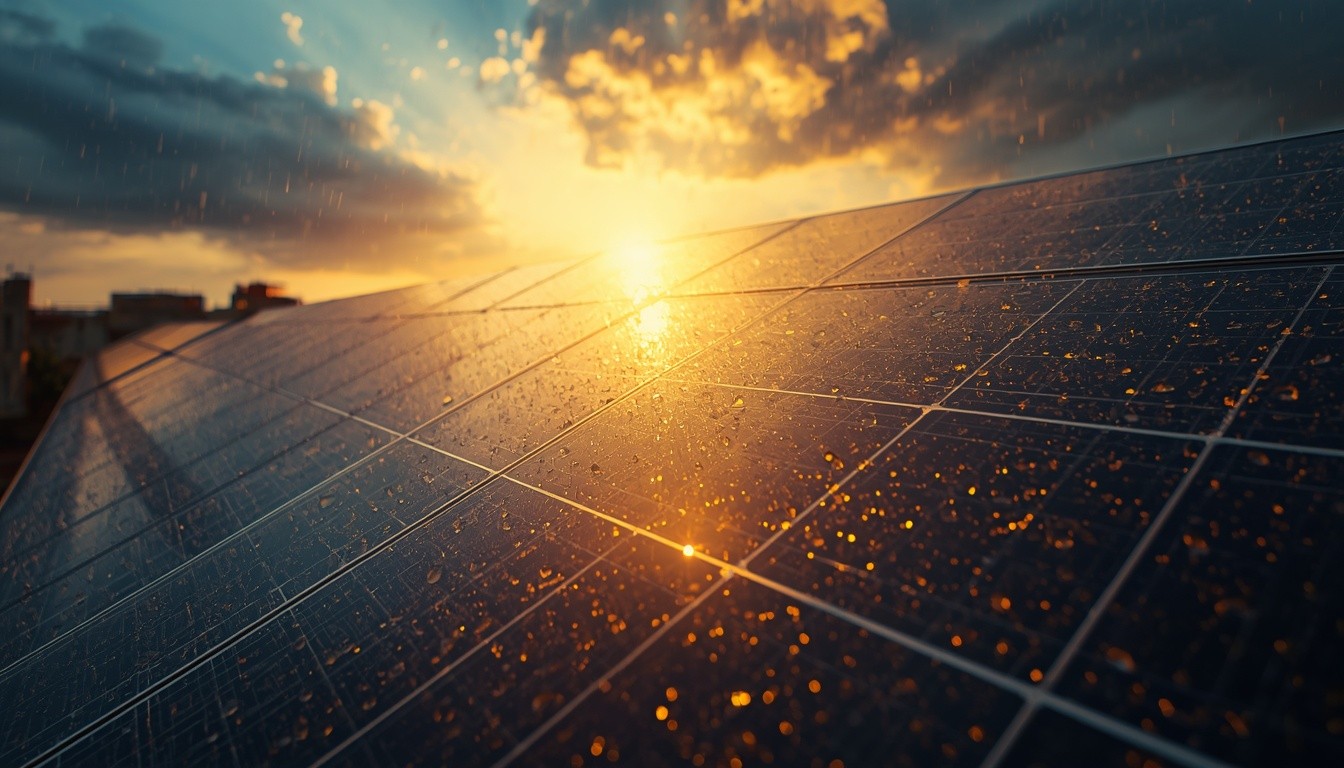
This is one of the most common concerns we hear from homeowners considering solar in Bengaluru and across Karnataka. And it is a completely understandable concern Karnataka receives significant rainfall during the monsoon season from June through September and many people assume that means their solar system will sit idle for four months of the year.
The honest answer is that solar panels do work during monsoon season just at reduced efficiency. They do not stop working. They do not get damaged by rain. And the financial impact of monsoon-reduced generation is accounted for in every properly calculated solar proposal.
This guide explains exactly what happens to your solar system during monsoon season, how much generation reduction to realistically expect, how professional solar companies account for it in system sizing, and why rain is actually beneficial for your panels in one important way.
How Solar Panels Generate Power
Before addressing the monsoon question it helps to understand how solar panels actually generate electricity.
Solar panels do not need direct sunlight to generate power. They generate power from light specifically from photons in the visible and near-infrared spectrum. Direct sunlight contains a high density of these photons and produces the maximum generation from your panels. But diffuse light the scattered light that reaches your panels on an overcast or cloudy day also contains photons and also generates electricity. Just less of it.
This is why your solar panels generate power even on a cloudy day. Not as much as on a clear sunny day but a meaningful amount. A heavily overcast day in Bengaluru during monsoon might produce 20 to 40 percent of your system's rated capacity. A lightly overcast day might produce 50 to 70 percent. An intermittently cloudy day with breaks in the cloud cover might produce close to normal generation during the clear periods.
The monsoon does not create four months of zero generation. It creates four months of reduced and variable generation which is a very different situation.
What Actually Happens to Generation During Monsoon in Karnataka
Bengaluru and Karnataka's monsoon season runs approximately from June through September with peak rainfall typically in July and August. Here is what solar generation actually looks like across the year:
October to February Peak generation season: Bengaluru's dry season with long clear days and low humidity. Solar panels operate closest to their rated efficiency. Generation is at its annual peak. A 3 KW system in Bengaluru generates approximately 380 to 420 units per month during this period.
March to May High generation, high heat: Clear skies continue but temperatures rise significantly. Solar panels are less efficient at very high temperatures panel efficiency decreases by approximately 0.35 to 0.45 percent for every degree above 25 degrees Celsius. So while sunlight is strong the heat reduces efficiency slightly. A 3 KW system generates approximately 340 to 400 units per month during this period.
June to September Monsoon season: Cloudy skies, reduced direct sunlight, and high humidity. Generation drops to approximately 50 to 70 percent of peak season levels. A 3 KW system in Bengaluru typically generates 180 to 260 units per month during this period significantly less than peak season but still a meaningful contribution to your electricity supply.
Averaged across the full year: A properly sized 3 KW system in Bengaluru generates approximately 300 to 360 units per month on a 12-month average accounting for the monsoon reduction. This is the number that matters for financial calculations not the peak season number.
How Reputable Solar Companies Account for Monsoon in System Sizing
A professionally designed solar system in Karnataka is sized based on annual average generation not peak season generation. This is critical and it is one of the most common ways that dishonest or inexperienced solar installers mislead customers.
Here is the problem: If an installer shows you a system proposal based on peak season generation numbers the 380 to 420 units per month a 3 KW system produces in Bengaluru from October to February your annual savings will look significantly larger than they actually are. When monsoon arrives and generation drops to 180 to 260 units your actual bill savings will be much lower than you were promised.
A properly prepared proposal shows you month by month generation estimates across the full year including the monsoon months. It shows the peak months, the monsoon months, and the annual average. Your return on investment calculation should be based on the annual average not on the best months.
At Arush Solar Tech every proposal we present includes month by month generation estimates for Bengaluru's specific solar irradiation profile. You see exactly what to expect in July and August not just in December and January.
The Hidden Benefit of Monsoon Natural Panel Cleaning
Here is something most solar companies do not mention when discussing monsoon season rain is excellent for your solar panels.
Dust accumulation on panel surfaces is one of the most significant causes of performance reduction in Indian solar installations. Bengaluru's air quality and seasonal dust particularly during the dry summer months causes a gradual build-up of dust and particulates on panel surfaces that can reduce generation by 5 to 25 percent compared to clean panels.
Every time it rains the rainwater washes this dust off your panels naturally. This means that after a good monsoon rain your panels are often cleaner than they have been in months and their generation efficiency increases accordingly.
This is why the first clear days after the monsoon season typically in October and November often show very strong solar generation. Clean panels plus long clear days equals peak performance.
The practical implication is that monsoon season is not purely a negative for solar generation. The reduced generation from cloud cover is partially offset by the improved panel efficiency from natural cleaning. The net impact is less negative than the cloud cover alone would suggest.
Does Rain Damage Solar Panels?
No. Modern solar panels are specifically designed and tested to handle rain, including heavy tropical monsoon rainfall.
All quality solar panels sold in India carry an IP68 weatherproofing rating IP standing for ingress protection. IP68 means the panels are completely sealed against dust and protected against sustained immersion in water. A heavy monsoon downpour presents no risk whatsoever to a properly rated solar panel.
Panel frames are typically made from anodised aluminium a material that resists corrosion from water and humidity without any special treatment or maintenance.
The junction boxes and connectors on the back of each panel where the electrical connections are made are also sealed to IP68 standard. Moisture cannot enter the electrical components of a properly manufactured panel under any normal weather condition including heavy monsoon rainfall.
Your inverter mounted on an exterior wall is also rated for outdoor installation and is designed to operate through rain and high humidity. Quality inverters carry IP65 or IP66 ratings meaning they are protected against heavy rainfall from any direction.
Hail is a more nuanced question. Standard residential solar panels are tested to withstand hailstones up to 25mm in diameter striking at 23 metres per second equivalent to roughly 83 kilometres per hour. Hail events of this intensity are rare in most parts of Karnataka but not impossible. The probability of hail damage in Bengaluru specifically is very low.
Lightning is a legitimate risk for any rooftop installation in a region with significant monsoon thunderstorm activity. A professionally installed system includes proper earthing and surge protection devices that protect your panels and inverter from lightning-induced voltage surges. This is a standard component of every Arush Solar Tech installation not an optional upgrade.
How to Manage Power Supply During Monsoon With Different System Types
How the monsoon affects your practical power supply depends significantly on which system type you have installed.
On Grid System During Monsoon: Your solar generation drops to 50 to 70 percent of normal during peak monsoon. Your home draws more power from the BESCOM grid than during the dry season. Your electricity bill increases compared to the dry season months but remains significantly lower than it was before you installed solar. Your net metering export credits will be lower during monsoon months.
This is completely normal and expected behaviour. Your annual savings are calculated on the 12-month average the higher savings in dry season months balance the lower savings in monsoon months.
Hybrid System During Monsoon: Your solar generation drops similarly. However your battery bank continues to charge during the day from whatever solar generation is available even reduced monsoon generation still partially charges your batteries. During power cuts your battery provides backup regardless of monsoon the backup capability is independent of current solar generation since the battery was charged earlier.
Your hybrid system is actually more valuable during monsoon season in areas with load shedding power cuts often increase during monsoon due to grid faults and your battery backup covers those periods.
Off Grid System During Monsoon: Monsoon season is the most challenging period for off grid systems. Reduced solar generation means slower battery charging. Extended overcast periods can significantly draw down your battery bank. A well-designed off grid system in Karnataka accounts for monsoon by sizing the battery bank and panel array to provide adequate generation even in the worst monsoon weeks.
If you have an off grid system or are planning one in Karnataka make sure the system is specifically sized for monsoon generation levels not just for average or peak season generation.
Practical Tips for Monsoon Season
Before monsoon clean your panels: Clean your panels thoroughly before the monsoon season begins. Starting monsoon with clean panels means the first rains wash off minimal dust panels that are already clean stay cleaner through the season. Professional panel cleaning costs very little and improves generation meaningfully.
Check your earthing and surge protection: Before monsoon begins verify that your system's earthing connections are secure and your surge protection devices are in good condition. This is a quick check that your installer can perform. It takes minutes and protects your system from lightning-induced damage during thunderstorm activity.
Monitor your generation: Most modern inverters include monitoring apps or web portals that show you daily generation figures. During monsoon check your generation data periodically. If generation is significantly lower than expected even on days with reasonable cloud cover it may indicate a panel fault rather than just weather-related reduction.
Do not worry about your system getting wet: Solar panels, properly installed wiring, and quality outdoor-rated inverters are designed to operate through monsoon. Rain itself poses no risk to a correctly installed system. If your installer expressed concerns about rain damaging your system during installation that is a red flag about installation quality not about the panels.
Adjust expectations seasonally: Your electricity bill will be lower during peak solar months and slightly higher during monsoon months but still significantly lower than before solar in both cases. Understanding this seasonal pattern means you will not be surprised or concerned when your monsoon month bill is higher than your December bill.
Does Monsoon Affect the Financial Return on Solar?
The monsoon season reduction in solar generation is already accounted for in every properly calculated solar financial proposal. It is not an unexpected variable that reduces your return it is a known and quantifiable factor that is included in the calculation from the start.
When Arush Solar Tech presents a proposal showing expected annual savings and payback period those figures are based on 12-month average generation not peak season performance. The monsoon months with their reduced generation are already in the calculation.
What the monsoon does not change:
Your system's 25-year panel performance warranty The capital cost of your installation Your net metering credit rate per unit The trend of rising BESCOM electricity tariffs that make your solar savings more valuable over time The fundamental economics of solar as a long-term investment in Bengaluru
What Arush Solar Tech Customers Experience During Monsoon
Every Arush Solar Tech customer who has experienced their first monsoon season after solar installation goes through a similar journey.
Before monsoon they are accustomed to very low electricity bills sometimes close to zero during the peak solar months. When the monsoon arrives and bills increase slightly from the peak-season low there is sometimes initial surprise.
When they check their generation data and compare their current bill to what they were paying before solar not to what they were paying in December the picture is clear. Even in the worst monsoon months the bill is significantly lower than pre-solar. The system is working exactly as it was designed to work.
This is why we show every customer month by month generation estimates in their proposal. There should be no surprises in month seven of owning a solar system every customer should know exactly what to expect before the first panel is installed.
Ready to Go Solar Before Monsoon?
Many Bengaluru homeowners wait until after monsoon to install solar thinking it makes more sense to start with the high-generation dry season. This is actually backwards.
Installing before monsoon means your system is commissioned, your BESCOM net metering application is submitted, and the approval process is underway during the monsoon period. By the time the dry season arrives in October your system is fully approved and earning net metering credits during the highest generation months of the year.
Installing after monsoon means you miss the entire peak generation season before your net metering is approved delaying the start of your maximum financial returns by months.
The best time to install solar in Bengaluru is now regardless of the season.
Book your free site survey today: Call +91-9686260065 or WhatsApp Somashekar on +91 78993 50511. Or fill in the contact form at arushsolartech.com and we will respond within 2 business hours.
Arush Solar Tech Bengaluru's authorised solar channel partner. Serving Karnataka since 2018.