3 min to read
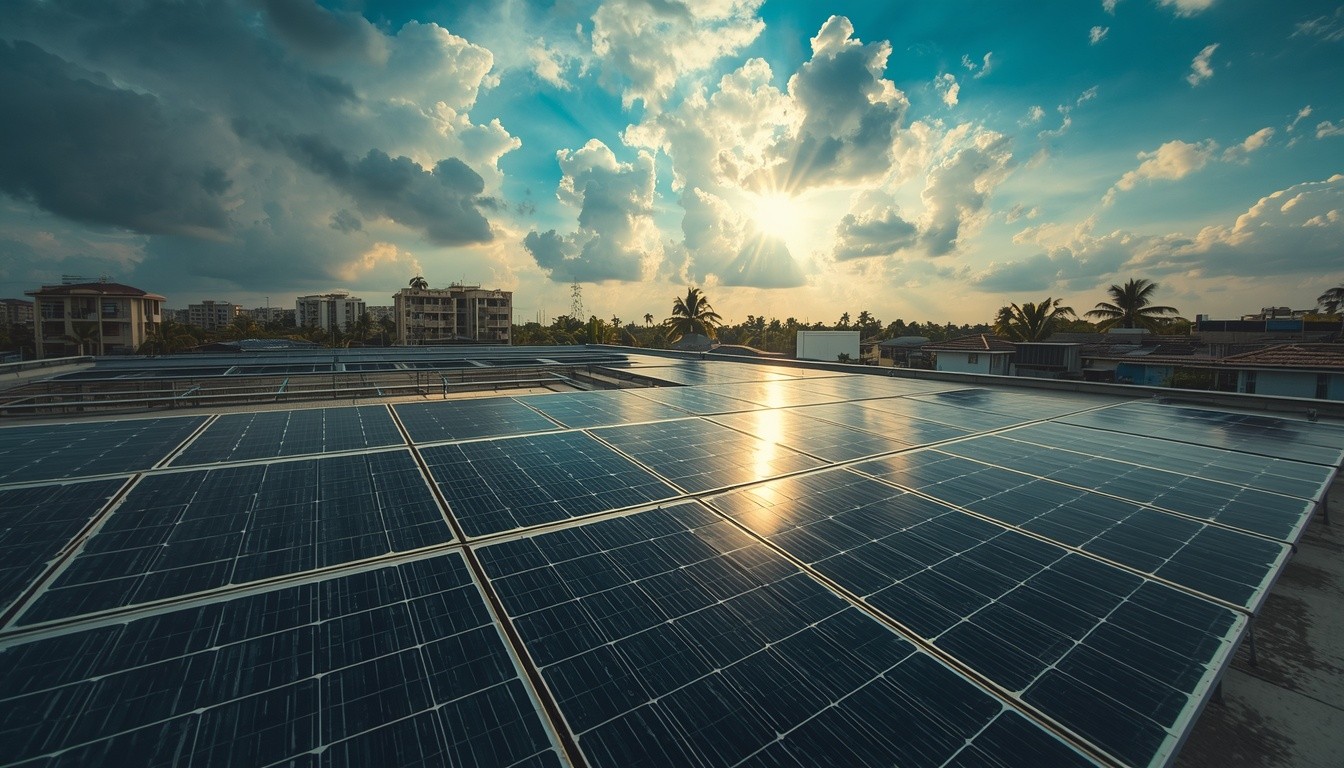
Something significant is happening across India's residential rooftops right now.
In Bengaluru alone the number of rooftop solar installations has grown dramatically over the past three years. Housing layouts that had one or two solar-equipped homes a few years ago now have dozens. Conversations about electricity bills in apartment WhatsApp groups increasingly end with someone asking who installed their neighbour's solar system.
This is not a trend driven by environmental idealism though that plays a role for some homeowners. It is driven by hard financial reality, improving technology, generous government subsidies, and a growing recognition that waiting to go solar is not a neutral decision. Every month without solar is a month of unnecessary electricity costs.
Here are the seven specific reasons why Indian homeowners are switching to solar in larger numbers than ever before in 2026 and why the momentum is only accelerating.
Reason 1: Electricity Bills Have Become Genuinely Painful:
BESCOM in Karnataka. MSEDCL in Maharashtra. TANGEDCO in Tamil Nadu. Electricity tariffs across India have increased consistently and significantly over the past decade and there is no credible reason to expect that trend to reverse.
In Bengaluru the per-unit cost of electricity has increased multiple times over the past ten years. A household that was paying ₹1,500 per month in electricity a decade ago is often paying ₹3,500 to ₹5,000 or more today for the same consumption purely because tariffs have risen.
This compounding increase has crossed a threshold for many homeowners. The bill is no longer an inconvenience it is a significant monthly expense that genuinely affects household finances. And unlike rent, food, or school fees the electricity bill is the one major expense that solar can eliminate almost entirely.
A correctly sized rooftop solar system reduces a typical Bengaluru household's BESCOM bill by 70 to 90 percent. For a home paying ₹4,000 per month that is a saving of ₹2,800 to ₹3,600 every single month ₹33,600 to ₹43,200 per year.
That saving compounds. As BESCOM tariffs continue to rise the monthly saving from solar gets larger every year automatically, with no additional investment.
Reason 2: Government Subsidies Have Made Solar More Affordable Than Ever:
The PM Surya Ghar Muft Bijli Yojana scheme launched by the Government of India is one of the most generous solar subsidy programs anywhere in the world. It provides direct financial subsidy of up to ₹78,000 for residential rooftop solar installations reducing the net cost of a typical 3 KW system for a 3BHK home to approximately ₹1,00,000 to ₹1,40,000 after subsidy.
That is a significant number. A solar system that eliminates ₹40,000 of annual electricity costs for a net investment of ₹1,20,000 pays for itself in approximately three years. The system then generates essentially free electricity for the remaining 22 years of its 25-year warranty period.
At that economics solar is not a luxury. It is one of the best financial decisions a homeowner can make comparable to or better than most conventional investment options when the risk-adjusted return is calculated properly.
Several state governments offer additional subsidies on top of the central scheme. Karnataka has run state-level programs supporting residential solar in specific districts and categories. The combined subsidy available to eligible homeowners can make the net installation cost even lower than the central scheme alone.
These subsidies are not permanent. Government subsidy schemes are revised periodically and the current generosity of PM Surya Ghar cannot be guaranteed to continue at current levels indefinitely. Homeowners who act in 2026 capture the full benefit of the current scheme those who wait may find reduced support.
Reason 3: Solar Technology Has Improved Dramatically:
The solar panels being installed on Indian rooftops in 2026 are fundamentally better than what was available five years ago and significantly better than what was available a decade ago.
Modern monocrystalline PERC and TOPCon panels achieve efficiency ratings of 21 to 23 percent meaning they generate 21 to 23 percent of all solar energy that hits their surface as electricity. A decade ago 15 to 17 percent was considered good. This improvement means you get more power from fewer panels occupying less rooftop space.
Panel durability has also improved. Modern panels are rated to withstand significantly higher mechanical loads important for India's monsoon conditions and occasional hail. Anti-reflective coatings reduce the performance impact of dust accumulation. Temperature coefficients have improved meaning panels lose less efficiency in India's high summer temperatures.
Inverter technology has advanced equally dramatically. Modern hybrid inverters manage solar panels, battery storage, and grid connection simultaneously with sophisticated algorithms that optimise every watt of generation. Remote monitoring through smartphone apps gives homeowners complete visibility of their system's performance in real time.
Battery technology specifically lithium iron phosphate chemistry has become more affordable and more reliable. The battery storage that makes hybrid systems effective in power-cut-prone areas of Bengaluru is now priced within reach of middle-class homeowners in a way it was not five years ago.
The combination of better technology at lower prices makes 2026 an exceptionally good time to install solar compared to any previous year.
Reason 4: Power Cuts Are Not Going Away:
Bengaluru is India's technology capital. It hosts the headquarters of global technology companies, employs hundreds of thousands of knowledge workers, and has one of the highest concentrations of home-based professionals and remote workers in India.
And yet power cuts load shedding remain a persistent feature of life in many parts of Bengaluru. North Bengaluru, parts of East Bengaluru, and areas on the outskirts experience regular interruptions that are genuinely disruptive to work-from-home professionals, online students, and families with medical equipment that requires uninterrupted power.
A hybrid solar system with battery backup addresses this problem permanently. When the BESCOM grid goes down the battery kicks in seamlessly most homeowners do not notice the transition. Work continues. Studies continue. Critical equipment stays powered. The disruption that used to derail a working day simply stops happening.
The financial value of this uninterrupted operation is real and significant but rarely calculated in solar ROI discussions. A knowledge worker who loses two hours of billable work per week to power cuts across 50 working weeks per year loses 100 hours of productive time annually. At any reasonable hourly rate that lost productivity is worth more than the annual electricity saving from solar alone.
Power cut elimination is not just a quality of life improvement it is a productivity investment with measurable financial return.
Reason 5: Solar Increases Your Property Value
This is a benefit that most homeowners do not think about when they consider solar but it is becoming increasingly significant as the resale property market in Bengaluru and other Indian cities matures.
A home with a functioning rooftop solar system and net metering approval is a home with a demonstrably lower monthly operating cost. For a prospective buyer choosing between two otherwise comparable properties in the same layout one with solar and one without the solar property offers a clear financial advantage from day one of ownership.
As solar adoption increases and awareness grows among property buyers this advantage is increasingly reflected in property valuations. Real estate agents in Bengaluru report that solar-equipped properties are attracting stronger buyer interest and in some cases achieving price premiums compared to non-solar properties in the same development.
For homeowners who may sell their property within the next decade solar installation is not just an operating cost saving it is a capital investment that adds demonstrable value to the property.
Reason 6: Net Metering Turns Your Rooftop into an Income Source
Beyond reducing your electricity bill grid-connected solar systems with BESCOM net metering approval can generate credits that carry forward month to month and effectively create a financial relationship between your rooftop and the electricity grid.
During peak solar generation months October through February in Bengaluru a correctly sized solar system often generates more electricity than the home consumes. This excess is exported to the BESCOM grid and credited at the current tariff rate against future bills. Some households effectively run a near-zero annual electricity bill the credits accumulated during high-generation months offset the higher grid consumption during monsoon months.
This is not theoretical. Arush Solar Tech customers who installed properly sized systems and received BESCOM net metering approval consistently report annual electricity costs reduced to near zero or the basic monthly fixed charges regardless of seasonal variation in generation.
As BESCOM tariffs increase over time the credit rate per unit exported also increases meaning the financial return from net metering becomes more valuable with every tariff revision. A solar system installed today becomes more financially beneficial every year that passes not less.
Reason 7: The Environmental Case Has Become Personal
India is experiencing the reality of climate change in ways that are no longer abstract or distant. Bengaluru a city that was famously temperate and was called the Garden City of India now experiences summer temperatures that regularly touch 38 to 40 degrees Celsius. Water scarcity, erratic monsoon patterns, and extreme weather events are part of the lived experience of Indian urban residents in a way they were not a generation ago.
For a growing number of Indian homeowners the decision to go solar has an environmental dimension that is genuinely personal not performative. Every unit of electricity generated from rooftop solar is a unit that does not need to be generated from coal-fired thermal power stations. Over the 25-year life of a typical residential solar system a single 3 KW installation prevents the emission of approximately 60 to 70 tonnes of carbon dioxide the equivalent of planting several thousand trees.
This environmental benefit does not appear in a financial ROI calculation. But for homeowners who are watching Bengaluru's climate change in real time and who have children who will inherit the environmental consequences of today's energy choices it is a genuine and meaningful part of the decision.
Solar is one of the few individual choices a homeowner can make that has a measurable positive environmental impact at meaningful scale not through sacrifice or compromise but through a decision that also makes excellent financial sense.
Why Waiting Is Not a Neutral Decision
Reading through these seven reasons it might be tempting to think yes, this makes sense, I will look into it next year.
But waiting to go solar is not a neutral decision. It has a specific and calculable cost.
Every month without solar is another month of paying full BESCOM tariffs that you did not need to pay. For a home paying ₹4,000 per month in electricity that is ₹4,000 of avoidable cost per month ₹48,000 per year.
Every month of delay is also a month of missing net metering credits that could have offset future bills. The BESCOM net metering approval process takes 45 to 90 days after installation which means the practical decision deadline to start generating returns from your system is 2 to 3 months before you want the system live.
Every month of delay is also a month in which government subsidies could be revised. PM Surya Ghar is generous now. It may be less so next year or the year after.
The question is not whether solar makes sense for the vast majority of Bengaluru homeowners with adequate rooftop space and a monthly electricity bill above ₹2,000 it clearly does. The question is how much unnecessary electricity cost you are willing to pay while you think about it.
What to Do Next
If any of these seven reasons resonates with your situation the next step is a free site survey not a purchase decision and not a commitment of any kind.
A free site survey from Arush Solar Tech involves our team visiting your property, assessing your rooftop, reviewing your electricity bills, and preparing a detailed proposal with exact system specifications, expected generation month by month, projected savings, applicable government subsidy, and net investment required.
You get all the information you need to make a fully informed decision without any obligation to proceed.
Arush Solar Tech has been delivering solar projects across Karnataka since 2018 from government camps at Virajpeta Range to Nagarhole National Park to 10 kilometres of BRT Tiger Reserve fencing to residential rooftops across Bengaluru. We bring that same standard of expertise and honesty to every site survey and every proposal.
Book your free site survey today. Call +91-9686260065 or WhatsApp Somashekar on +91 78993 50511. Or fill in the contact form at arushsolartech.com and we will respond within 2 business hours.
Arush Solar Tech Bengaluru's authorised solar channel partner. From Karnataka's national parks to your rooftop professional solar since 2018.